




 Date: 09 Oct, 2025
 Posted by Press Release
At Impurityx, we celebrate every scientific milestone that reshapes the way the world understands molecules, materials, and matter.
This year’s Nobel Prize in Chemistry (2025) honors three visionary scientists — Susumu Kitagawa, Richard Robson, and Omar M. Yaghi — whose pioneering work on Metal–Organic Frameworks (MOFs) has fundamentally redefined how we build and manipulate materials at the molecular level.
Their collective research not only opened a new chapter in structural chemistry but also laid the foundation for sustainable applications that could transform industries — including pharmaceuticals, catalysis, and environmental remediation.
🧩 What Are Metal–Organic Frameworks (MOFs)?
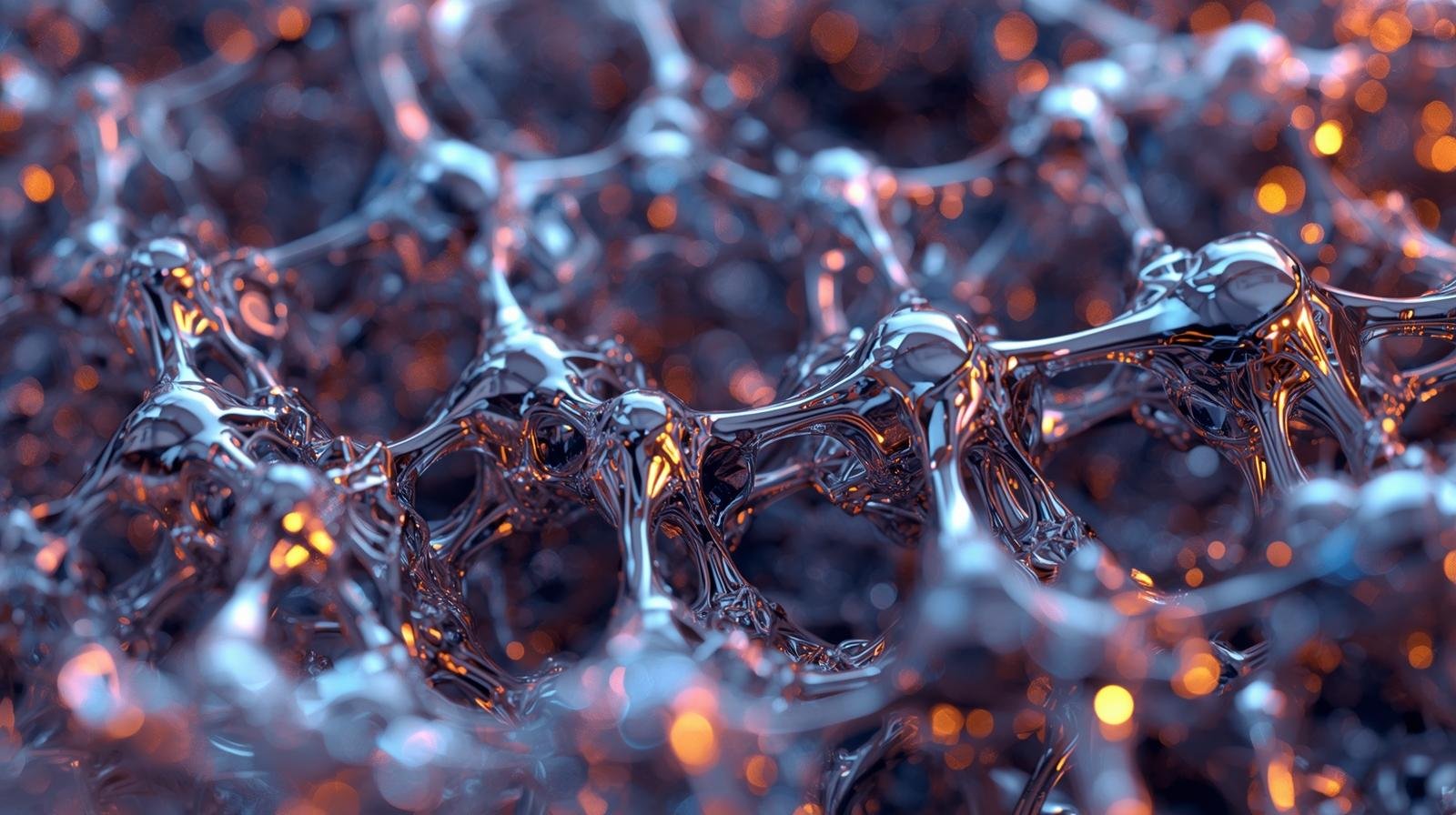
Metal–Organic Frameworks (MOFs) are crystalline materials made by linking metal ions or clusters with organic ligands, creating a highly ordered, porous 3D network.
In simple terms, they are molecular scaffolds with enormous internal surface areas — a single gram of MOF can contain more internal area than a football field.
This structure allows MOFs to trap, store, and selectively release molecules or gases, making them immensely valuable for gas separation, storage, drug delivery, catalysis, and adsorption of impurities — all highly relevant to modern pharmaceutical and chemical sciences.
👨🔬 The Laureates and Their Breakthroughs
🧪 Richard Robson (Australia)
Robson was among the first to demonstrate how metal ions could be linked with multi-armed organic ligands to form infinite, periodic networks — the earliest versions of what we now know as coordination polymers.
His work in the late 1980s established the geometric principles that allowed the controlled design of porous materials, sparking global research into metal–organic architectures.
⚗️ Susumu Kitagawa (Japan)
Kitagawa’s key breakthrough was proving that MOFs could reversibly absorb and release gases — showing that these frameworks were not just static crystals but dynamic, breathing structures.
He also introduced the concept of framework flexibility, paving the way for MOFs that adapt their shape or porosity based on environmental conditions — a concept crucial for smart material design and controlled adsorption in chemical systems.
🔬 Omar M. Yaghi (USA)
Yaghi advanced the field by introducing reticular chemistry, a design approach that allows scientists to build MOFs like molecular LEGO®, with predictable structures and tunable properties.
He synthesized stable frameworks that could withstand harsh conditions while performing complex tasks — from carbon dioxide capture and water harvesting to gas storage and drug encapsulation.
Yaghi’s work transformed MOFs from scientific curiosity into a practical, scalable class of materials with real-world impact.
🌍 Applications with Global Significance
The significance of MOFs extends far beyond academia. Their tunable structure and reactivity open diverse applications across industries:
-
Carbon Capture & Storage: Efficiently capturing CO₂ and reducing greenhouse emissions.
-
Water Harvesting: Extracting pure water from air in arid climates using solar energy.
-
Gas Storage: Safely storing hydrogen and methane for clean energy solutions.
-
Pharma & Biotech: Acting as molecular cages for controlled drug delivery, purification of APIs, and removal of residual impurities.
-
Catalysis: Serving as highly specific catalysts for fine chemical synthesis.
-
Environmental Cleanup: Adsorbing and decomposing persistent pollutants, including PFAS and organic residues.
For the pharmaceutical and chemical research community, MOFs exemplify the next generation of functional materials — where structure dictates purpose, and chemistry becomes design-driven.
🏆 Why This Nobel Matters for the Future of Science
The 2025 Nobel Prize in Chemistry highlights a profound shift in the field — from studying molecules to constructing them into frameworks that perform engineered functions.
Kitagawa, Robson, and Yaghi have demonstrated that by thinking architecturally, chemists can design materials that store, sense, purify, and protect at the molecular scale.
Their discoveries embody the same spirit that drives Impurityx — precision, structure, and purpose-driven chemistry.
As we continue to bridge innovation with application in the pharma ecosystem, such breakthroughs remind us that the future of chemistry lies not just in reactions, but in creation.